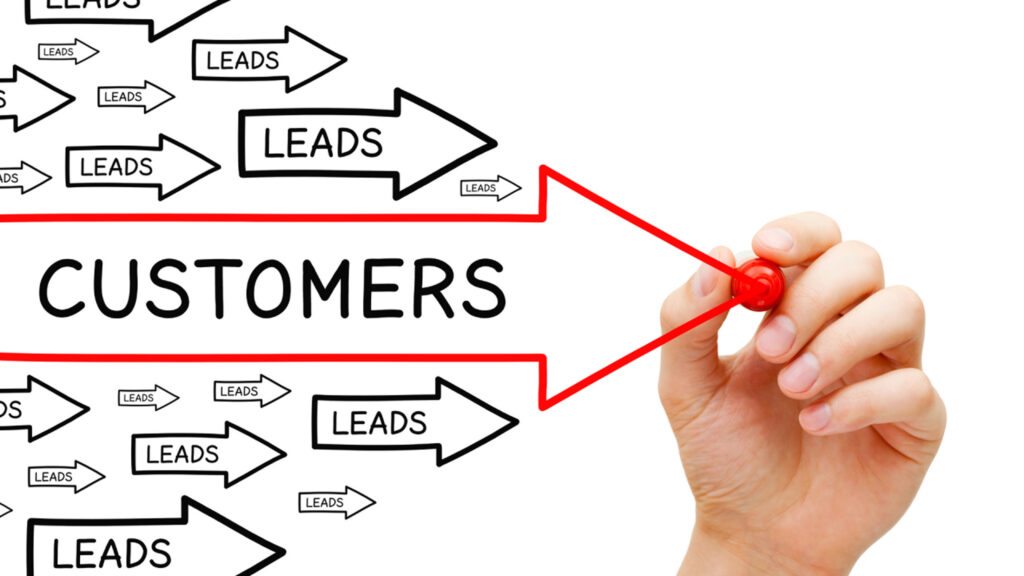
Businesses spend enormous amounts of time and money generating leads. However, attracting interest represents only the beginning of the revenue process.
A successful campaign can generate calls, forms, emails, chats, and appointments. Yet those opportunities disappear quickly when nobody manages what happens next.
Weak follow-up, slow response times, poor handoffs, and inconsistent communication can destroy strong marketing results.
Therefore, businesses need more than lead generation. They need a dependable lead follow-up strategy that connects marketing activity with real customer conversations.
EagleONE approaches growth from that perspective. Its services connect Digital Marketing, Lead Generation, and Customer Experience to help move opportunities from initial interest toward conversion.
Strong marketing attracts attention. SEO, paid advertising, social media, email, and other campaigns can encourage prospects to raise their hands.
However, marketing cannot close every opportunity alone.
Someone must answer the phone. Someone must respond to the form. Likewise, someone needs to qualify the prospect and determine the next step.
Unfortunately, many companies invest heavily before the lead arrives but underinvest afterward.
As a result, marketing generates demand while operational gaps allow that demand to disappear.
The real question should not simply be, "How many leads did we generate?" Instead, businesses should ask, "What happened to every lead afterward?"
Timing matters because customer interest has a shelf life.
A prospect who requests information today may contact another company minutes later. Therefore, waiting several hours can completely change the conversation.
Companies should establish clear response standards for calls, emails, forms, chats, and other lead sources.
Additionally, every employee should understand who owns the first response.
Salesforce's 2025 State of Service research found that 82% of service professionals believe customer expectations have increased. Customers increasingly expect fast, convenient, personalized help.
Explore Salesforce's 2025 State of Service Report
Fast follow-up does more than create convenience. It demonstrates that the business values the customer's interest.
Another problem occurs when leads move between departments.
Marketing may generate the inquiry. Then, an appointment setter qualifies it. Next, a salesperson takes ownership.
Every handoff creates an opportunity for information to disappear.
For example, the prospect may explain specific needs during the first conversation. However, the salesperson may never receive those details.
Consequently, the customer must explain everything again.
That frustration matters.
Adobe's 2025 customer journey research found that 78% of consumers expect seamless experiences across digital and physical channels. Yet only 45% of brands meet that expectation.
Read Adobe's 2025 Customer Journey Research
Therefore, businesses need documented handoff procedures, shared CRM information, clear ownership, and accountability.
Customers also notice when every representative communicates differently.
One employee promises a callback today. Another says tomorrow. Meanwhile, an email provides completely different information.
Eventually, the customer begins questioning the company rather than the product.
Consistency does not require robotic scripts. Instead, businesses need clear messaging, accurate customer records, conversational guidelines, and dependable follow-up processes.
Moreover, teams should record meaningful notes after every interaction.
Those notes create continuity. They also allow another representative to continue the conversation without forcing customers to start over.
Today's customer journey rarely happens through one communication channel.
A prospect might discover a company through Google, complete a website form, receive an email, and eventually speak with someone by phone.
Therefore, businesses need coordinated communication across phone, email, chat, SMS, and other channels.
Salesforce reported in September 2025 that omnichannel routing can direct requests across voice, chat, email, SMS, messaging, and social channels. Effective routing also reduces unnecessary delays.
Read Salesforce's 2025 Omnichannel Routing Guide
Meanwhile, Qualtrics' 2025 Omnichannel CX Benchmark analyzed more than 27,000 U.S. consumers across seven customer interaction channels.
View the Qualtrics 2025 Omnichannel CX Benchmark
The lesson remains simple: customers experience one company, even when several departments handle their journey.
Companies can reduce missed opportunities by defining exactly what happens after every lead arrives.
First, assign ownership immediately. Next, establish response-time goals and track whether teams meet them.
Additionally, document each interaction inside the CRM.
Businesses should also measure unanswered calls, overdue follow-ups, abandoned inquiries, appointment rates, contact rates, and conversion rates.
EagleONE supports this process through inbound customer experience, outbound communication, appointment setting, lead generation, and digital marketing services.
Together, these functions can help close the gap between generating an opportunity and converting it.
Getting more leads will not solve a broken follow-up process.
In fact, increasing lead volume can make the problem worse.
Successful marketing creates opportunity. However, disciplined follow-up captures its value.
Therefore, businesses should examine everything that happens after someone raises their hand.
Respond quickly. Create clean handoffs. Communicate consistently. Track every opportunity. Most importantly, never assume generating the lead means the job is finished.
Because many companies do not have a lead-generation problem.