Many businesses treat the sale as the final step in the customer journey. However, the most valuable relationships usually develop after the purchase.
A new customer can become a repeat buyer, referral source, reviewer, advocate, or long-term client.
Therefore, companies need a post-sale customer journey that continues well beyond the initial transaction.
That journey should include onboarding, customer appreciation, ongoing support, follow-up, retention, reactivation, referrals, and repeat purchases.
EagleONE supports this broader growth model by combining Customer Experience, Lead Generation, and Digital Marketing into a more connected customer strategy. (eagle1group.com)
Customers want reassurance after making a purchase.
They want to know what happens next, who will help them, and whether the company will deliver what it promised.
For that reason, strong onboarding should begin quickly.
Clear welcome communication, setup instructions, service expectations, and check-ins can reduce uncertainty.
Additionally, onboarding helps customers reach value sooner.
HubSpot's 2026 customer onboarding guidance emphasizes creating early wins and setting clear expectations during the first stages of the relationship. (blog.hubspot.com)
A smooth start can strengthen confidence and reduce the risk of early customer loss.
Companies often communicate aggressively before the sale.
Then, once the customer buys, communication slows dramatically.
That creates a noticeable gap.
Instead, businesses should continue acknowledging customers after the purchase.
Thank-you calls, follow-up messages, anniversary notes, and personal check-ins can make customers feel valued.
EagleONE includes outbound customer touchpoints such as welcome calls, thank-you calls, and feedback outreach within its service model. (eagle1group.com)
Customer appreciation does not need to feel complicated.
Often, consistent attention creates a stronger impression than another discount.
Customer service plays an important role in future revenue.
When customers need help, they judge the company based on speed, clarity, and professionalism.
A strong support experience can restore confidence after a problem.
However, a poor response can damage the relationship permanently.
EagleONE provides inbound support across phone, live chat, email, order support, technical support, reservations, and appointment scheduling. (eagle1group.com)
Salesforce reported in 2025 that 80% of customers consider the experience a company provides as important as its products or services. (salesforce.com)
Therefore, customer support should contribute to retention, not simply problem resolution.
Customers should not hear from a company only when something goes wrong.
Instead, consistent follow-up can keep the relationship active and relevant.
Companies can use satisfaction calls, renewal reminders, service check-ins, educational content, or product updates.
Additionally, follow-up gives customers opportunities to share concerns before those concerns become reasons to leave.
Salesforce's 2025 customer retention guidance shows that service organizations increasingly measure retention as a core performance indicator. (salesforce.com)
That makes follow-up an important part of long-term revenue planning.
Winning a new customer requires marketing, sales effort, and operational resources.
Therefore, losing that customer quickly reduces the return on that investment.
Retention changes the economics.
A customer who stays longer may purchase again, upgrade services, or expand the relationship.
Furthermore, loyal customers can create more predictable revenue.
Salesforce's 2025 loyalty guidance links stronger customer loyalty with repeat purchases, referrals, and increased lifetime value. (salesforce.com)
For that reason, companies should monitor churn, retention rates, repeat purchases, and customer lifetime value.
Inactive customers do not always represent lost customers.
Sometimes, timing changes.
A customer may have paused because of budget, priorities, seasonality, or changing needs.
Therefore, businesses should create a structured reactivation strategy.
Phone, email, and SMS outreach can reopen conversations with past customers.
Businesses can introduce updated services, new products, special offers, or helpful check-ins.
Because these customers already know the company, reactivation can create valuable revenue without starting from zero.
Satisfied customers can contribute far more than their own purchases.
They can recommend the company to friends, colleagues, and business contacts.
They can also provide testimonials, reviews, and introductions.
Salesforce notes that referral programs can support lead quality, credibility, retention, and customer lifetime value. (salesforce.com)
However, businesses should ask for referrals at the right moment.
The best time usually comes after the customer has experienced clear value.
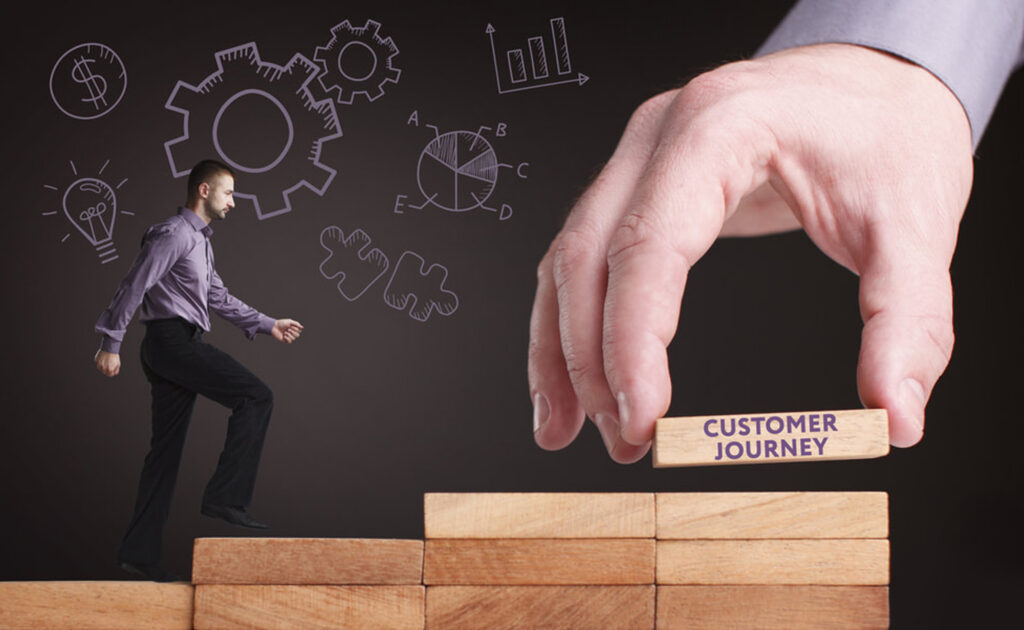
The customer journey should not run in a straight line from marketing to sale.
Instead, the relationship should continue after conversion.
Onboarding strengthens confidence. Appreciation builds connection. Support protects trust. Follow-up maintains engagement. Retention increases long-term value.
Then, repeat purchases, referrals, and reactivation create new revenue opportunities.
That turns the customer journey into a continuous revenue cycle.
EagleONE's combination of Customer Experience, Lead Generation, and Digital Marketing supports this broader approach to customer growth. (eagle1group.com)
Closing the sale remains important.
However, the real value often comes from what the business does next.
The strongest companies do not simply win customers.
They build relationships that continue producing value long after the first purchase.